
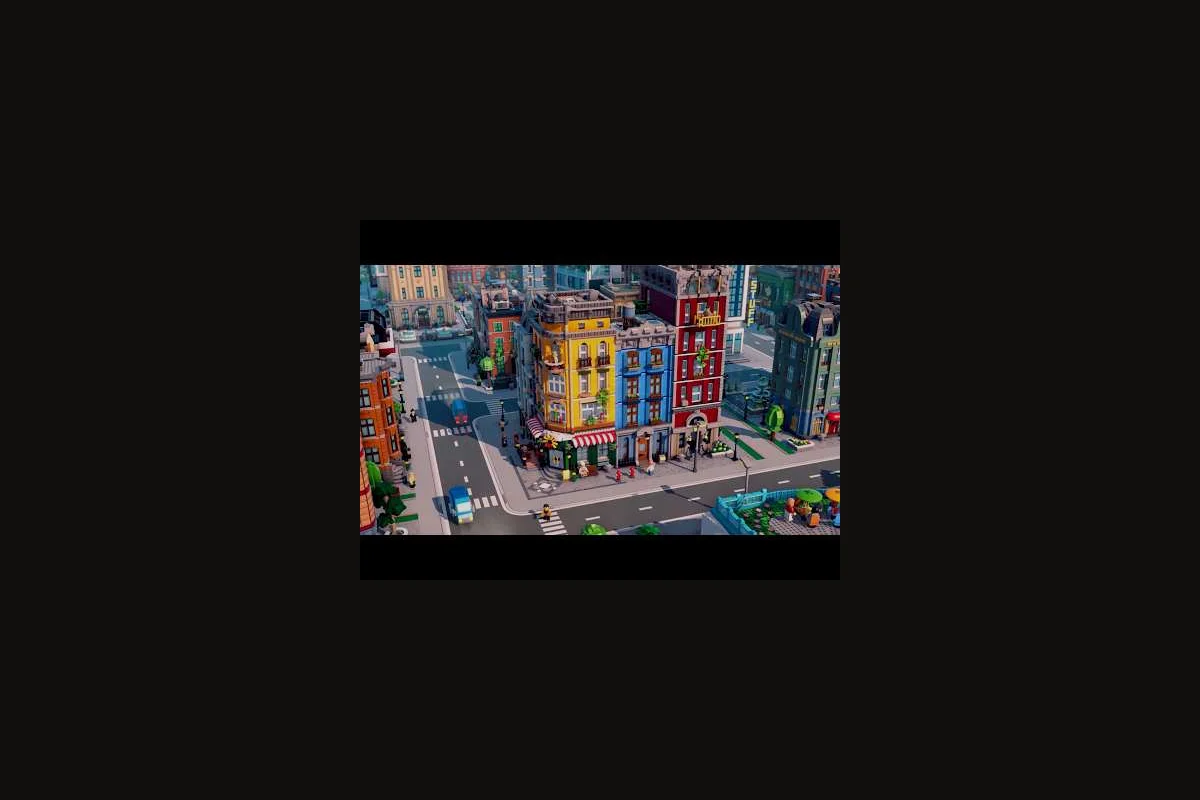
Food production is the quiet engine behind every healthy district in LEGO Skylines, and getting it wrong is the fastest way to watch a budget bleed dry. The official Steam description confirms that food sits alongside electricity, water, housing, and jobs as one of the core management responsibilities, which means a strong LEGO Skylines food production pipeline is the difference between a thriving town and a stalled save file. Players who plan their farms, donut shops, and worker assignments together tend to unlock faster LEGO Skylines city growth because the resource loop never starves the next ring of buildings.
Why Food Production Is the Anchor of the LEGO Skylines Economy
Food is unique among LEGO Skylines utilities because it does two jobs at once. It feeds citizens, which keeps happiness and health metrics stable, and it is the direct input for donut shops that pump commercial tax back into the treasury. Treat it as just a "happiness tax" and you will over-spend on farms; treat it as just another commodity and you will starve the population. According to the official LEGO Skylines page on Paradox Interactive, the production loop explicitly covers food, electricity, and water as the basics that must be solved before expanding into homes, jobs, and services — so a working food line is a prerequisite for almost every other system.
For a deeper look at how the food chain threads into the wider workforce, the LEGO Skylines production chains guide breaks down the supply-side mechanics in detail. That companion page maps every upstream link feeding a bakery or grocery store, so you can see exactly how a single wheat field shortage cascades into a residential happiness drop and a tax-income shortfall of several thousand credits per cycle.
The Three Roles Food Plays in Your City
Food is rarely a single-purpose resource in LEGO Skylines. Players who climb the population tiers fastest treat food as three overlapping systems: a Residential Demand driver that fuels zoning growth, a Commercial Income multiplier that boosts tax revenue from shops and markets, and a Specialized Industry input that unlocks higher-tier processed goods like pastries and gourmet meals. Mastering all three channels simultaneously is what separates a stuck hamlet from a booming metropolis.
-
Citizen sustenance — every resident consumes a small slice of food each cycle, and unmet demand shows up first as lower happiness, then as abandoned homes.
-
Commercial input — donut shops and similar commercial buildings convert raw food into higher-value taxable goods, magnifying every farm you place.
-
Economic stabilizer — because food is consumed continuously, a steady food plan smooths out the income spikes that pure housing taxes create during a population boom.
Common Food Pipeline Mistakes First-Time Mayors Make
A surprising number of save files fail not because the player ignored food, but because they automated it without thinking about scale, and the most common pitfalls reported by early playtesters reveal just how brutal the budget curve can be when Farm crop yields plateau at roughly 800 units per tile while a single Residential block can demand 1,200 units once it hits Level 3 density. The most common pitfalls reported by early playtesters include:
-
Building one large farm far from the donut shop cluster, then watching transport times erode the profit.
-
Over-zoning residential before commercial is ready, so food demand spikes faster than supply can answer.
-
Ignoring water adjacency, because farms in LEGO Skylines rely on the same pipe network as houses.
-
Spending the early surplus on decorations rather than a second farm, only to hit a food cliff at the next population tier.
Reading the Food Production Panel and Planning Around It
Before placing a single farm, the food panel tells you what the city actually needs. The food production readout shows the current net output (production minus consumption) and the projected demand at the next population bracket, which is the single most useful number for any LEGO Skylines economy guide. If projected demand outpaces supply by more than about 20%, you are one tier away from a deficit, and that is the moment to spend on capacity rather than cosmetics.
| Metric | What It Tells You | Healthy Range (Early City) |
|---|---|---|
| Net Food Output | Production minus household consumption | Positive, with at least 15% headroom |
| Farm Coverage Radius | How many homes a single farm reaches | 80–90% of current homes inside the radius |
| Donut Shop Demand | Commercial pull on raw food | At least 1 active shop per 2 farms |
| Food Surplus Buffer | Stored food that smooths demand spikes | 10–20% of weekly output |
| Worker Slots Used | Farmhands currently assigned vs. available | 70–85% utilization |
Reading those numbers together is what turns a food build from "I placed a farm" into a real LEGO Skylines production guide. A farm that runs at 100% utilization with no donut shop nearby is technically productive but economically wasted, because the surplus is being consumed by homes instead of sold back as tax revenue.
For a wider lens on how farm placement fits into the bigger resource picture, the LEGO Skylines resource guide maps out the relationship between water, power, and food grids, showing that a mid-tier Industrial Farming zone typically needs 8–12 water tiles and a nearby Transformer Substation to keep crop yields above the 85% efficiency threshold. Pairing this with the budget guide also helps you decide whether the higher upkeep of a GMO Crop Field beats the steadier output of a standard Wheat Farm when residential demand spikes.
Phasing Your Food Build Across Population Tiers
A flat "build three farms and forget" strategy falls apart by the second district because crop yields stay static while household demand scales with every Population Tier milestone, creating a deficit cascade that forces bulldozing and re-zoning. A phased plan ties wheat, dairy, and greenhouse placement to the Industrial → Residential → Service Tier shift, keeping the food line aligned with LEGO Skylines economic planning at every step and avoiding the tax-income collapse that hits players who over-build before the second wave of workers arrives.
-
Tier 1 (under 500 citizens): One farm, one donut shop, all clustered around the starting road. The goal is to prove the loop, not maximize output.
-
Tier 2 (500–1,500 citizens): Add a second farm on the opposite side of the residential cluster so coverage stays tight, and place a second donut shop near the new homes.
-
Tier 3 (1,500–4,000 citizens): Begin a dedicated commercial district with multiple donut shops, and consider upgrading farms rather than just adding more.
-
Tier 4 (4,000+ citizens): Layer in service buildings, because large populations magnify the cost of any food shortage in lost tax revenue.
Balancing Farms, Jobs, and Citizens in the Food Loop
Food production is not a solo system; it lives inside the broader job market, and every farm you place competes for workers with houses, shops, and industrial buildings. That is the part most LEGO Skylines budget guide material glosses over, and it is where the real economic planning happens. A farm with no workers produces nothing, so the food line must be balanced against the employment panel, not just the food panel.
| Building Type | Worker Demand | Food Output/Input | Tax Contribution | Typical Placement |
|---|---|---|---|---|
| Wheat Farm | 8–12 workers | High output, low upkeep | Low | Edge of residential ring |
| Donut Shop | 4–6 workers | Consumes food, produces goods | High | Commercial cluster |
| Residential (Low) | 0 workers | Consumes food | Income tax | Inside farm coverage |
| Residential (High) | 0 workers | Consumes more food | Higher income tax | Near services |
| Park | 1–2 workers | None | None | Between farms and homes |
The table makes the trade-off obvious: farms demand the most workers but contribute the least tax, while donut shops demand fewer workers and return far more per unit of food. That asymmetry is why the most efficient LEGO Skylines resource management setup keeps the farm count low and the donut shop count high, then uses the tax surplus to fund more services.
Worker Flow: From Houses to Farms Without Starving Other Zones
A common failure pattern is that an aggressive residential buildout pulls every available worker into homes and shops, leaving farms unmanned and letting the Food Production bar crash even when fertile land is plowed. Two habits prevent this: stage residential zones in small 2x2 blocks behind your farm belt, and use the Budget slider (around 120–130%) on Farms whenever the worker count icon shows fewer than 8 assigned employees per field tile.
-
Always check the jobs panel after zoning a new residential block. If "unfilled farm jobs" jumps above 10%, pause new housing and let workers migrate.
-
Use donut shops as a release valve. Because they are smaller, they fill faster and free up pressure on the worker pool, which lets farms keep producing while the city expands.
Sizing Farms and Donut Shops for a Stable Budget
Capacity planning is where the food line either pays for itself or quietly drains the treasury. A farm that is too small forces you to buy another one too soon; a farm that is too large sits idle and wastes workers. The same logic applies to donut shops, except upside-down — a donut shop that is too small caps the commercial tax ceiling and slows LEGO Skylines city growth even when food is plentiful.
| City Stage | Recommended Farms | Recommended Donut Shops | Expected Weekly Tax Lift |
|---|---|---|---|
| Starter Village | 1 | 1 | Baseline |
| Small Town | 2 | 2–3 | +20–30% |
| Growing District | 3 | 4–5 | +40–55% |
| Multi-District City | 4–5 | 6–8 | +70–90% |
| Late-Game Megacity | 5–6 (upgraded) | 8–10 (upgraded) | +100%+ |
Notice how donut shops scale faster than farms. That ratio is intentional in the game's design: the official store description calls out the donut shop as a recognizable commercial staple, and the LEGO Skylines announcement trailer shows it as a flagship building. If your donut shop count is not pulling ahead of your farm count, you are under-capturing the tax value of every bushel you produce.
Upgrades vs. New Builds: When to Spend
Upgrading a farm in LEGO Skylines is almost always better than placing a new one in the same coverage zone, because upgrades raise output per worker rather than doubling your payroll. A Tier 2 Wheat Farm, for example, produces 20% more food per worker than a Tier 1 build at the same wages, so the economy guide logic favors paying the upgrade cost over hiring a second crew on adjacent land. Reserve new farm builds for when your expanding city footprint has pushed residential demand outside the current farm's delivery range, and pair each new placement with a nearby Granary to cut food spoilage losses.
-
A new residential ring sits outside the coverage radius of existing farms.
-
The food panel shows demand climbing past the upgraded capacity ceiling.
-
You are opening a second district and want a self-sufficient local food line.
Adding more crop output or silo capacity to a farm that is already worker-starved in LEGO Skylines is a common budget sink, because the additional tiles, conveyor extensions, and storage slots sit unstaffed while your Labor Pool stays capped. Worker starvation typically happens when nearby residential zoning has stalled or the commute radius is broken, so the upgrade cost is better deferred until you fix housing or reroute the road network; otherwise you pay more in upkeep and get the same harvested yield per shift.
Food Shortages, Recovery, and Long-Term Stability
Even a careful plan hits a food shortage eventually, usually right after a major population jump or a road rework that splits a coverage radius in half. Recovery is faster if the city was built with redundancy, and it is painfully slow if every farm sits in a single cluster. According to community testing reported by players, a single well-placed farm can cover roughly 15–20 homes depending on road layout, so any ring of 25 or more homes benefits from a second farm on a different edge.
For the full pattern of how food ties into the income side, the LEGO Skylines income guide walks through how donut revenue interacts with the rest of the budget — and crucially, why a single bakery covering 120 residents only produces about 30 meals per in-game week, far below the 200+ weekly demand a fully developed residential tile generates once you cross the 2,500-population milestone.
Diagnosing a Food Cliff in Three Clicks
When the budget suddenly turns red, the food line is often the hidden culprit — a single un-upgraded Wheat Farm feeding 8,000 Cims can silently drain 12–15% of weekly income while underproducing by 40%. Run this quick three-click diagnostic: open the Economy panel, sort industries by weekly balance, then cross-check each food producer's Output vs. Demand in the Production menu to catch the gap before the next payroll cycle hits.
-
Click the food production panel and check net output. If it is negative, you are losing ground every cycle.
-
Open the unemployment overlay. If farm jobs are unfilled but residential demand is rising, workers are being absorbed by homes.
-
Hover a donut shop and check its input line. If it shows "waiting for food," the shop is idle and you are losing the tax multiplier on every unit of food you do produce.
Building a Food Line That Survives Late Game
Late-game cities stress the food system with multiple districts, each with its own residential and commercial demand. The pattern that holds up best across community reports is a hub-and-spoke layout: one upgraded farm hub per district, multiple donut shops clustered around it, and a small buffer of commercial capacity that can absorb a temporary outage. This keeps LEGO Skylines economic planning predictable even as the city doubles in size, and it leaves room to drop in a service building or park without breaking the food loop.
Frequently Asked Questions
What is the fastest way to start LEGO Skylines food production in a new city?
Place one wheat farm on the edge of your starting residential block, then add a single donut shop nearby so the first surplus converts into tax revenue. Confirm that the farm sits inside the water pipe coverage and that workers are available before zoning any new homes.
How many farms do I need for a mid-sized district?
For roughly 1,500 to 4,000 citizens, two to three upgraded farms paired with four to five donut shops is a stable target. If the food panel shows more than 20% unmet demand at the next tier, add a third farm rather than stacking more donut shops on a starving input.
Does food production really affect the LEGO Skylines budget guide numbers?
Yes, because donut shops convert raw food into commercial tax, which is one of the largest non-residential income sources in the mid-game. A well-fed commercial district can lift weekly income by 40% or more compared to a city that treats food as a pure upkeep cost.
Can food shortages cause citizens to move out?
They can, especially when combined with low happiness from missing services. A persistent negative food balance is one of the fastest ways to flip residential demand from positive to negative, which is why the food panel should be checked every time a new ring of housing is unlocked.
Should I upgrade farms or build new ones late game?
Upgrade first while a farm still has free worker capacity inside its active coverage zone, because adding a second farm on the same edge mostly steals workers from the first. Build a new farm only when a new residential ring falls outside the existing radius.